Oct 20, 2026
How to Introduce a New Cat to Your Home: A Step-by-Step Plan

Quick answer: Keep the new cat in a separate “base” room for at least several days, swap scents before any face-to-face meeting, then introduce them gradually with supervised, short visits. Most cats need one to four weeks to settle, and some need longer.

Before the cat comes home

Book a vet check for the newcomer and ask about testing for feline leukemia (FeLV) and FIV. Prepare a quiet room with a litter box, food, water, a hiding spot and a scratching post. Resident cats should have their own resources too. A common guideline is one litter box per cat plus one extra.

Step 1: Start with a separate room

Place the new cat in the base room and let everyone rest. Resident cats will smell the newcomer under the door, and that is a good first step. Keep routines the same for your resident cat so they do not link the stress to the new arrival.

Step 2: Swap scents

Cats rely on smell to recognize friends and strangers. Rub a clean sock on one cat’s cheeks and leave it near the other cat’s food bowl. Swap bedding or let each cat explore the other’s room while the other is elsewhere.

Step 3: Feed on opposite sides of a door

Place food bowls a few meters from the closed door and move them closer day by day. When both cats eat calmly, you are ready for a visual introduction.

Step 4: First sight, with a barrier

Use a baby gate, a cracked door or a mesh screen so the cats can see each other. Keep the first sessions short, a few minutes, and end on a positive note with treats or play. Watch body language: relaxed ears, slow blinking and curiosity are good. Hissing is normal at first, but growling, flattened ears or fixed staring mean you should add distance.

Step 5: Supervised time together

Open the barrier while you are present. Use interactive toys and keep a towel or a piece of cardboard nearby to separate the cats gently if tension rises. Never use your hands to break up a fight.

Signs it is going well

  • Relaxed posture and normal eating
  • Sniffing without growling
  • Occasional play or grooming each other
  • Both cats using the litter boxes normally

When to slow down

Go back a step if you see repeated fights, blocking of food or litter areas, hiding for days, or changes in appetite. If problems last, ask your vet to rule out medical causes and consider a certified cat behavior consultant.

FAQ

How long does it take cats to get used to each other?

Many cats tolerate each other within one to four weeks, but full friendship can take a few months.

Should I let my cats fight it out?

No. Fighting can create lasting fear and hostility. Separate them calmly and restart more slowly.

Is it easier to introduce a kitten or an adult cat?

Kittens often have an easier time, but a very energetic kitten can overwhelm an older cat. Match energy levels when you can.

This guide is for general information only and is not a substitute for advice from a qualified veterinarian. If your pet seems unwell, contact your vet.

More Details

Jul 15, 2026
Why Do Cats Stare at Nothing?

Your cat locks eyes on a blank corner of the room. Nothing is there — no movement, no sound, no insect. Just an empty wall, and a cat staring at it with absolute focus for two full minutes. The ghost theory is tempting, but the real explanation is more fascinating: according to feline behaviour specialist Dr. Sarah Ellis of the International Cat Care organisation, cats aren’t seeing ghosts — they are perceiving things that are genuinely there, just entirely below our sensory threshold.

The Cat’s Sensory World vs Ours

To understand why cats stare at “nothing,” you first need to understand how profoundly different their sensory experience of the same room is.

Hearing that extends far beyond human range

Humans hear frequencies up to roughly 20 kHz. Cats hear up to 64 kHz — more than three times our upper limit. This is not a minor difference. It means a cat sitting in your living room can hear the ultrasonic squeaking of a mouse inside the wall cavity, the high-frequency hum of an electrical appliance you cannot detect, the vibration of water in a pipe 10 metres away and the ultrasonic clicks of insects you have no idea are present. When your cat stares fixedly at a blank wall for two minutes without moving, there is a very reasonable chance there is a mouse or a large insect on the other side of that wall, and your cat knows exactly where it is.

Vision tuned for motion and low light

Cats have a much higher density of rod cells in their retinas than humans — the cells responsible for detecting movement and light in dim conditions. This makes them extraordinarily sensitive to motion, particularly at the periphery of their visual field. A speck of dust moving in a shaft of light, the minute flicker of a LED indicator across the room, the almost imperceptible motion of a curtain in a slight draught — all of these can trigger the full freeze-and-stare hunting response in a cat. Their tapetum lucidum (the reflective layer at the back of the eye that causes eyeshine) also amplifies available light, making dim rooms far more visually rich to a cat than to a human standing in the same space.

Whisker sensitivity and air currents

A cat’s whiskers are deeply embedded sensory organs that detect minute changes in air pressure and movement. A barely perceptible air current from a ventilation duct, a gap under a skirting board or the movement of a small insect several metres away can be detected through whisker sensitivity alone. What you see as a cat staring at nothing may actually be a cat reading air currents with extreme precision.

The Most Common Reasons Cats Stare at Nothing

In most cases the explanation is entirely mundane — just beyond our perceptual range.

  • Rodents or insects inside walls: the most common explanation for sustained wall-staring; a cat that stares at the same spot repeatedly over several days is almost certainly tracking something — check for signs of mice or insects in that area
  • Ultrasonic sounds from appliances: refrigerators, HVAC systems, electrical wiring and even certain lightbulbs emit ultrasonic frequencies that cats find alerting or irritating; a cat that stares at an appliance or corner near wiring may be responding to sounds the entire household is unaware of
  • Light reflections and visual artefacts: light bouncing off a glass, a phone screen or a watch face can create minute flickers on walls and ceilings that cats track intently; this is particularly common in the morning and evening when low sunlight angles produce reflections
  • Scent trails: a mouse or insect that has moved along a wall leaves an olfactory trail that persists long after the animal has gone; a cat may appear to stare at a blank wall while actually reading a scent map invisible to us
  • Predatory hunting focus: indoor cats with no live prey to hunt redirect their stalking behaviour toward subtle environmental stimuli; the freeze-and-stare is the beginning of the hunting sequence, triggered even when the stimulus is too small for us to see

About That Ghost Theory

The belief that cats can see spirits is ancient and widespread — and the science makes it easy to understand why the myth persists.

Ancient Egyptians considered cats sacred guardians of the spiritual world. Japanese folklore features the bakeneko — a supernatural cat spirit. Across many cultures, a cat staring at nothing is interpreted as evidence of supernatural perception. The reason this myth is so persistent is that the behaviour is genuinely mysterious from a human perspective: the cat is clearly focused on something, responding to something, but we cannot perceive what. The actual explanation — that cats are experiencing a sensory world dramatically richer than ours in the same physical space — is arguably just as impressive as the ghost theory, and considerably better supported by evidence. There is no scientific evidence that cats perceive paranormal phenomena. There is overwhelming evidence that they perceive real phenomena we cannot.

When Staring Is a Warning Sign

Occasional staring at nothing is entirely normal. These specific patterns warrant veterinary assessment.

Behaviour Most likely explanation Action
Brief stare (under 1 min), then normal Sensory stimulus below human threshold Normal — no action needed
Repeated staring at the same wall spot Rodent or insect inside the wall Check for pests
Staring + whisker twitching + lip licking Possible focal seizure Vet assessment needed
Staring + apparent confusion afterward Post-ictal state (after seizure) Vet assessment urgently
Staring in older cat + night-time vocalisation Cognitive dysfunction syndrome (CDS) Vet assessment needed
New behaviour + high blood pressure symptoms Hypertension-related visual disturbance Vet assessment needed

Brief stare, then normal

Explanation: Sensory stimulus below human threshold

Action: Normal — no action needed

Staring + whisker twitching + lip licking

Explanation: Possible focal seizure

Action: Vet assessment needed

Staring in older cat + night vocalisation

Explanation: Cognitive dysfunction syndrome

Action: Vet assessment needed

Focal (partial) seizures in cats can look exactly like a cat staring at nothing — the only difference is a subtle twitch of the whiskers or jaw, possible drooling or lip-licking, and a brief period of confusion or hiding afterward. If your cat’s staring episodes are followed by any disorientation, they deserve a veterinary assessment. Feline hypertension (high blood pressure) can also cause visual disturbances and abnormal staring — it is a common and treatable condition in older cats, often secondary to kidney disease or hyperthyroidism.

Further reading on cat behaviour:

FAQ

Can cats really see ghosts?

There is no scientific evidence for this. What cats can do is perceive real stimuli — ultrasonic sounds, micro-movements, scent trails, air currents — that are completely below human sensory threshold. The result looks supernatural from our perspective, but the explanation is physiological. A cat staring at a wall is almost certainly responding to something genuinely there.

Why does my cat stare at me while I sleep?

Several reasons: you are in their territory and they are monitoring you, they want attention or food and are waiting for you to wake, or they simply find watching you restful the same way you might find watching a cat restful. Cats often watch the people they are bonded to during quiet moments — it is a form of low-level social monitoring rather than anything unsettling.

My cat stares at the ceiling and then suddenly runs away. Why?

The combination of ceiling staring and sudden flight strongly suggests an insect — a moth, a spider or a small fly — that the cat detected, tracked and then either lost or decided to pursue. Cats can hear and detect insects at distances that make it look like the ceiling is empty when in fact something very small is moving there at the edge of the cat’s detection range.

Should I interrupt my cat when it’s staring at nothing?

For normal sensory-triggered staring, there is no need to interrupt — let the cat complete the behaviour. Startling a cat out of a focused state can cause stress. If you are concerned about seizures, film an episode on your phone without disturbing the cat, so your vet can review the footage — this is far more useful than a verbal description of what you saw.

This guide is for general information only and is not a substitute for advice from a qualified veterinarian. If your pet seems unwell, contact your vet.

More Details
Jun 24, 2026
Kitten Care Checklist: The First 12 Weeks at Home

Quick answer: In the first 12 weeks, a kitten needs kitten-formulated food, a safe space, a litter box, a first vet visit, a vaccination schedule set by your vet, gentle socialization and a kitten-proofed home. Never give cow’s milk.

Before the kitten arrives

  • Kitten food and shallow bowls
  • A litter box with unscented litter
  • A cozy bed and a carrier
  • A scratching post and safe toys
  • A kitten-proofed room with cords and toxic plants removed

Week 1: Settling in

Give the kitten a quiet base room. Show them the litter box, food and water. Let them explore at their own pace. Schedule a vet visit within the first few days.

Weeks 2 to 4: Routine and training

  • Feed several small meals a day of kitten food
  • Reinforce litter box use by placing the kitten there after meals and naps
  • Start gentle handling of paws, ears and mouth
  • Introduce a harness or carrier gradually

Weeks 5 to 8: Socialization

The socialization window is a key period. Safely expose the kitten to people, sounds and handling. Play with interactive toys, not hands, so the kitten learns bite inhibition.

Weeks 8 to 12: Health

Vaccines usually begin at 6 to 8 weeks with boosters every 3 to 4 weeks until about 16 weeks, and rabies is usually given around 12 to 16 weeks. Your vet will set the exact schedule, along with deworming, flea prevention and microchipping. Ask about the right age to spay or neuter.

Feeding basics

Choose a complete and balanced kitten food. Kittens need more calories and protein than adults. Provide fresh water at all times, and avoid cow’s milk, which can cause an upset stomach.

Kitten-proofing checklist

  • Hide or cover electrical cords
  • Remove toxic plants such as lilies
  • Secure windows and balcony doors
  • Keep small objects, string and rubber bands out of reach
  • Check the washing machine and dryer before closing

When to call the vet

Contact your vet if your kitten has diarrhea, vomiting, lethargy, sneezing with discharge, refuses food or hides for a long time.

FAQ

When can kittens go outside?

Wait until the vaccination series is complete, and consider keeping your cat indoors for safety.

How many times a day should I feed a kitten?

Typically three to four small meals a day for young kittens, then fewer as they grow.

How much do kittens sleep?

Often 16 to 20 hours a day.

This guide is for general information only and is not a substitute for advice from a qualified veterinarian. If your pet seems unwell, contact your vet.

More Details
Jun 9, 2026
Why Do Cats Bring Dead Animals Home?

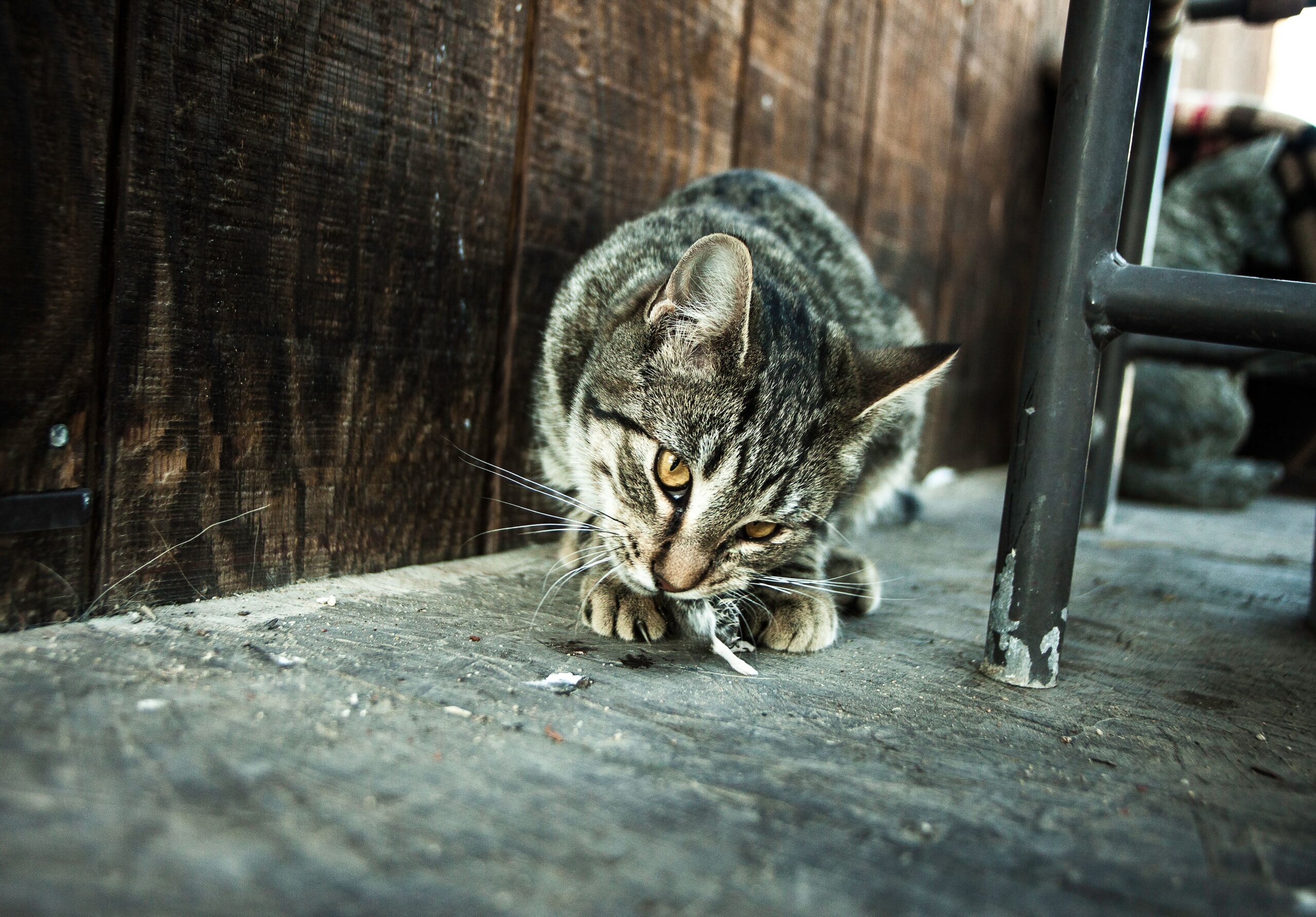
You open the door and find a dead bird on the mat. Your cat sits nearby, watching you with what appears to be quiet satisfaction. According to veterinarian Dr Stephanie Liff of Pure Paws Veterinary Care, this is not random and it is not morbid — it is one of the most instinctive behaviours a cat can display, rooted in millions of years of feline evolution. Whether it is an act of love, a teaching moment or simply practicality depends on which theory you find most convincing — and possibly on your individual cat.

Cats Bring Dead Animals Home

Several well-supported theories exist — and they are not mutually exclusive. Your cat may be acting on more than one of them at once.

Maternal instinct: bringing food to the family

The most prominent scientific theory, supported by urban ecologist Emmanuelle Baudry of Paris-Saclay University, is rooted in maternal behaviour. In the wild, mother cats hunt and carry food back to their kittens — first dead prey for the kittens to eat, and later injured prey for them to practise killing. This behaviour is so deeply embedded that even spayed cats with no kittens, and male cats, still display it. The humans in the household become the “family” to whom the cat is delivering food. Your home is the den — the safe place where resources are brought and shared. Seen through this lens, the dead bird on your doorstep is one of the more sincere things a cat can do for you.

Home as a safe place to eat

A second, more pragmatic theory is that cats bring prey home simply because home is where they feel safest. Eating in the open, away from their territory, leaves a cat vulnerable — both to having food stolen by other animals and to being ambushed while distracted. Bringing the catch back to the house eliminates that vulnerability. This theory helps explain why cats often drop prey at the door or in the kitchen rather than eating it outside: they are securing their meal in the safest location available before consuming it. The fact that they often do not eat it after bringing it home does not disprove this — once inside, the urgency of the instinct passes.

Teaching you to hunt

A third theory is that cats bringing prey to their humans are attempting to pass on hunting skills. Mother cats do not just feed kittens — they demonstrate. By bringing prey home, a cat may be treating its owner as an incompetent family member in need of instruction. This theory gains some support from the observation that cats sometimes bring live or barely alive animals rather than cleanly killed ones — presenting a “practice target” rather than a finished meal. Whether cats have sufficient theory of mind to genuinely intend this as teaching is debated, but the behavioural pattern mirrors what mother cats do with kittens closely enough to be worth considering.

They Sometimes Bring Live Animals

Finding a half-alive mouse in your kitchen at midnight is particularly alarming — but it fits the same framework.

Cats that bring live or injured prey home are most likely acting on the teaching instinct — delivering a practice target for the “kittens” (you) to finish. Mother cats do exactly this: they deliberately bring incapacitated but living prey so their kittens can practice the kill sequence in a controlled environment. When your cat drops a stunned bird at your feet and then watches you expectantly, they may be waiting for you to finish the job. When you react with panic instead, the cat is genuinely puzzled by your apparent incompetence. Live prey is also sometimes brought home simply because the cat was distracted or interrupted during the kill and completed the journey home before finishing.

Not All Cats Do It

Hunting frequency and prey-sharing behaviour vary significantly between individual cats — and research has started to identify why.

A 2023 study published in Ecology and Evolution found that more dominant, aggressive and active cats brought home significantly more dead animals than timid, friendly cats. Cats with more outdoor access and territory to roam, particularly in rural areas, hunt and bring home prey more frequently than urban cats with limited outdoor time. Kittens that were taught to hunt by their mothers are more consistent hunters than those raised without maternal hunting instruction. Indoor-only cats hunt toys with the same instinctive drive but have no opportunity to bring home real prey. The absence of the behaviour does not mean a cat lacks hunting instincts — it usually means they simply have fewer opportunities or are temperamentally less inclined to demonstrate the behaviour toward humans.

How to Reduce the Behaviour

You cannot remove the hunting instinct — but you can significantly reduce how often it produces results.

  • Bell collar: a collar with a bell reduces hunting success by warning prey of the cat’s approach — studies suggest it reduces bird kills by 41% and mammal kills by 34%, though determined hunters adapt over time
  • Brightly coloured collar cover: a brightly coloured fabric “bib” or cover around the collar makes cats more visible to birds during the approach stalk — some studies report higher effectiveness than bells alone
  • Timed outdoor access: limiting outdoor time to midday hours, when birds and small mammals are least active, substantially reduces hunting opportunities; dawn and dusk are peak hunting times
  • Increase play: interactive play with wand toys, feather lures and puzzle feeders gives the predatory drive a domestic outlet and reduces the urgency of hunting outdoors
  • Microchip cat flap: a timed or microchip-activated cat flap that locks at night eliminates the most productive hunting hours without fully restricting outdoor access

Further reading on cats and wildlife:

FAQ

Should I punish my cat for bringing home dead animals?

No. The behaviour is entirely instinctive and your cat has no capacity to connect a delayed punishment with the earlier action. Punishing a cat after the fact teaches them only that you are unpredictable — it does not reduce hunting. Reducing opportunity and redirecting the drive through play are the only reliably effective approaches.

Is it a sign my cat loves me?

In a functional sense, yes — the behaviour is directed at family members, not strangers. A cat that brings prey to you has categorised you as part of their social group. Whether this constitutes “love” in an emotionally rich sense is a matter of interpretation, but it is certainly a social gesture directed specifically at you.

Are there health risks from my cat bringing home prey?

Yes, some. Dead animals can carry parasites (including fleas and ticks), bacterial infections and occasionally diseases like toxoplasmosis. Cats that regularly hunt should be kept up to date with deworming and flea prevention. Handle any prey your cat brings in with gloves and dispose of it carefully. The risk to humans is low but not zero, particularly for pregnant women regarding toxoplasmosis.

My indoor cat has never been outside. Why does it hunt toys so aggressively?

Because the hunting drive is hardwired, not learned. An indoor cat has never seen a mouse but will stalk, pounce on and “kill” a toy mouse with exactly the same sequence of behaviours a wild cat uses on real prey. The instinct does not require experience to activate — it simply redirects toward whatever is available.

This guide is for general information only and is not a substitute for advice from a qualified veterinarian. If your pet seems unwell, contact your vet.

More Details
Jun 2, 2026
Do Cats Miss You When You Leave?

The popular image of the cat as a solitary, indifferent creature that barely notices when you leave is not quite accurate. A 2019 study published in Current Biology found that cats form attachment bonds with their owners in a pattern strikingly similar to the attachment styles seen in dogs and human infants — and that most cats use their owner as a secure base, showing measurable stress when separated and relief when reunited. The question is not really whether cats miss you. It is how much — and how subtly they show it.

What the Research Actually Shows

Cats have a reputation for independence — and it is partly deserved. But independence is not the same as indifference.

The 2019 attachment study

Researchers at Oregon State University conducted the first large-scale study of cat attachment styles using the Ainsworth Strange Situation Test — a classic assessment developed to measure human infant attachment that has since been validated for dogs. Cats were placed in an unfamiliar room with their owner for two minutes, then left alone for two minutes, then reunited with their owner. The results showed that 65% of cats displayed a secure attachment style — using their owner as a safe base from which to explore, showing mild stress during separation and greeting the owner calmly but warmly on return. Only about 35% displayed insecure attachment styles. This mirrors the proportions found in both human infants and dogs, and directly contradicts the assumption that cats do not form meaningful bonds with their owners.

Cats behave differently after longer absences

A separate study found that cats left alone for several hours purred significantly more on their owner’s return than cats separated for only 30 minutes — a subtle but measurable difference that suggests cats do register the duration of your absence, even if they do not express it dramatically. Unlike dogs, whose greeting intensity scales fairly predictably with absence duration, cats often show their response in quieter ways: more purring, more rubbing, more proximity-seeking in the hours after reunion rather than a spectacular greeting at the door.

Signs Your Cat Missed You

Cats communicate subtly — knowing what to look for is the key to understanding what your cat is actually expressing.

  • Following you from room to room: a cat that shadows you closely after you return home is re-establishing proximity — a behaviour that reflects genuine attachment
  • Head butting and cheek rubbing: cats have scent glands on their cheeks and forehead and rub them against people they feel close to as a bonding and marking behaviour; an increase in this after your return is a clear affection signal
  • Slow blinking from across the room: the slow blink is a feline signal of trust and comfort — a cat that slow-blinks at you from a distance when you return home is communicating warmth on their own terms
  • Increased vocalisation: some cats that rarely vocalise become more talkative after a period of separation — meowing, chirping or trilling at you in what appears to be a catch-up conversation
  • Kneading: an increase in kneading behaviour — particularly on you or your belongings — after a return is a comfort and bonding behaviour associated with feeling safe
  • Sleeping near your belongings: during your absence, cats often rest on or near items that carry your scent — your worn clothing, your pillow — as a form of comfort
  • Increased appetite at reunion: some cats that reduce eating slightly during a long absence return to normal eating as soon as their owner is back — the stress of the absence having suppressed appetite

Missing You vs Separation Anxiety

Most cats handle short absences comfortably. Some cats develop a clinical anxiety response that requires attention.

Missing you (normal) Separation anxiety (clinical)
While you’re away Rests, explores, sleeps normally Vocalises excessively, destructs, stops eating
On your return Warm but calm greeting, settles quickly Frantic, clingy, very slow to settle
Litter box use Normal May urinate outside the box from stress
Grooming Normal Over-grooming, hair loss from stress
Action needed None — healthy attachment Vet or behaviourist consultation

Missing you (normal)

While away: Rests and sleeps normally

On return: Warm, calm greeting, settles quickly

Action: None — healthy attachment

Separation anxiety (clinical)

While away: Vocalises, destructs, stops eating

On return: Frantic, very slow to settle

Action: Vet or behaviourist consultation

How to Help Your Cat When You’re Away

Cats are more routine-dependent than most owners realise — predictability is the foundation of feline comfort.

  • Keep their routine consistent: feeding, play and interaction at the same times each day reduces anticipatory anxiety — cats that know when to expect you are far calmer than those in unpredictable environments
  • Leave your scent: a worn piece of clothing left where your cat likes to rest provides genuine olfactory comfort — cats’ sense of smell is central to their sense of security
  • Enrich the environment: window perches, bird feeders outside the window, puzzle feeders and rotating toys give cats something engaging to do when alone — environmental enrichment significantly reduces stress-related behaviours
  • Keep them at home: cats are strongly territorial and feel most secure in their own space — cattery boarding disrupts both their routine and their territory simultaneously; a cat sitter who visits daily in the cat’s own home is far less stressful for most cats
  • Consider a second cat: for cats that show signs of loneliness, a compatible feline companion can make a substantial difference — though introductions must be done gradually and carefully

Further reading on the cat-owner bond:

FAQ

Do cats miss you more if you are gone longer?

Research suggests yes — cats that are separated for longer show more post-reunion bonding behaviour. However, cats appear to reach a threshold rather than continuing to escalate — the response to a two-week absence is not dramatically more intense than the response to a two-day absence for most securely attached cats.

My cat ignores me when I come home. Does that mean it did not miss me?

Not necessarily. Cats with a secure attachment style often greet their owners briefly and then continue with what they were doing — this is a sign of security, not indifference. Watch for the slower signals in the hours after your return: proximity-seeking, purring, rubbing and increased interaction are all meaningful even without a dramatic door greeting.

Should I get a second cat so mine is not lonely?

It depends entirely on the individual cat. Some cats are genuinely happier with a companion; others are territorial and stressed by a housemate. Age, history, temperament and the introduction process all matter significantly. A cat that shows signs of loneliness — excessive vocalisation, destructive behaviour, appetite changes — is a good candidate for a companion, introduced very gradually over several weeks.

Do cats remember their owners after a long time apart?

Yes — cats have strong scent-based memory and can recognise people they have not seen for years. Reunions after long separations are often initially cautious rather than immediately warm, as the cat re-establishes context, but most securely bonded cats reconnect fully within days.

This guide is for general information only and is not a substitute for advice from a qualified veterinarian. If your pet seems unwell, contact your vet.

More Details
Apr 18, 2026
Why Do Cats Knock Things Off Tables?

Your cat looks you dead in the eye. Then, slowly and deliberately, pushes your coffee mug off the table. According to certified cat behaviour consultant Pam Johnson-Bennett, this is not random chaos — and it is definitely not spite. Cats knock things over for real, well-documented reasons rooted in their biology, their hunting instincts and, occasionally, a very calculated desire for your attention.

The Real Reasons Cats Knock Things Over

It is not malice. It is not boredom alone. The behaviour makes complete sense once you understand how a cat’s brain and body are wired.

Their paws are how they explore the world

A cat’s paws are packed with sensitive nerve endings — they are precision instruments for detecting texture, temperature, movement and weight. When a cat bats at an object, they are gathering information about it: is it alive? Does it move? Is it prey? This is the same impulse that drives them to paw at a rustling bag, a dangling string or an insect on the wall. The fact that the object falls and makes a noise and your face changes is just bonus data.

Their inner hunter is always switched on

Cats are obligate carnivores with prey-drive hardwired into their nervous system. Small, lightweight objects — a pen, a phone, a marble — trigger the same neural response as a mouse or a small bird. The sideways swipe that sends your glass flying is functionally identical to the killing blow a wild cat uses to stun prey. Cats do not choose to suppress this instinct when they come indoors; they simply redirect it toward whatever is available. Static objects on a flat surface are irresistible targets because when touched, they move — and moving things are, to a cat, always potentially alive.

It gets your attention — and they know it

Cats are observant and fast learners. A cat that pushes something off a table and receives a dramatic reaction — a gasp, a sprint across the room, an exclamation — has just learned that this behaviour produces an immediate, guaranteed response from you. From the cat’s perspective, this is a highly effective attention-getting strategy, far more reliable than sitting quietly waiting to be noticed. The more consistently you react, the more reliably they repeat it. Delgado notes that this pattern typically develops when owners fail to acknowledge cats for calm or desirable behaviour, leaving knocking things over as the most efficient tool available.

Boredom and understimulation

An indoor cat with insufficient mental and physical stimulation will find ways to entertain itself. Knocking objects off elevated surfaces is engaging: there is the physical sensation of the swipe, the visual interest of the falling object, the sound of impact and often a dramatic human response at the end. For a cat that spends most of the day sleeping in a quiet house with nothing to hunt, this sequence is genuinely stimulating. Cats that are well exercised through play, have access to puzzle feeders and environmental enrichment, and receive regular interactive attention from their owners knock things over significantly less often.

Why Tables and Shelves Specifically?

Cats prefer elevated surfaces for multiple reasons — and the height makes the knocking even more satisfying.

Cats are natural climbers that seek high vantage points to survey their territory and feel safe. Tables, shelves and counters give them height, visibility and control — and they also happen to be covered in objects. From an elevated position, cats can detect objects entering their close-range blind spot (the area directly below their chin, which they cannot see clearly) and respond by batting at them. The fall from height also creates more dramatic visual and auditory feedback than objects moved at ground level — a glass falling two feet makes a very satisfying sound and travels an interesting trajectory. This may be why cats seem to favour knocking things off tables rather than pushing objects along the floor.

How to Reduce the Behaviour

You will not stop the instinct — but you can redirect it so your belongings survive.

  • Do not react: the single most effective step is to stop providing the reward — turn away, leave the room, say nothing; a cat that gets no response eventually finds something more interesting to do
  • Increase play: two 10–15 minute interactive play sessions daily using wand toys, feather lures or laser pointers significantly reduces redirected predatory behaviour
  • Clear high-value surfaces: if your cat targets the same objects repeatedly, remove them; cats lose interest in surfaces that offer nothing to interact with
  • Add environmental enrichment: cat trees, window perches, puzzle feeders and rotating toys give cats legitimate outlets for curiosity and predatory drive
  • Secure irreplaceable items: museum putty, non-slip mats and display cases protect objects that cannot be moved — a practical solution for fragile valuables
  • Reward calm behaviour: use treats or affection to reinforce your cat sitting quietly near you, so they learn that calm behaviour also produces a response

Further reading on feline behaviour:

FAQ

Is my cat doing it to annoy me on purpose?

Not in the way the meme suggests. Cats do not plan mischief or feel spite. The motivation is attention-seeking, not revenge.

My cat only does it at night. Why?

Cats are crepuscular — most active at dawn and dusk, and often active during the night. If they have not had sufficient stimulation during the day, the night hours are when pent-up predatory energy tends to surface. A good play session in the evening, followed by a small meal, often helps — mirroring the hunt-catch-eat-sleep sequence cats are wired for.

Should I punish my cat for knocking things over?

No. Cats do not connect punishment with the behaviour that caused it, especially after the fact. Punishing a cat for knocking something over teaches them only that you are unpredictable — it does not reduce the behaviour and often increases anxiety.

Why does my cat stare at me while doing it?

Because your face is the most interesting thing in the room. Cats are highly attuned to human facial expressions and reactions. The eye contact while knocking things over is part of the attention-seeking dynamic — they are watching to see if this action produces the desired response from you. Looking away and leaving the room is the correct counter-move.

This guide is for general information only and is not a substitute for advice from a qualified veterinarian or certified animal behaviourist.

More Details
Apr 15, 2026
Why Do Cats Sleep So Much?

The average adult cat sleeps between 12 and 16 hours a day — and kittens and senior cats can reach up to 20 hours. According to veterinarian Marty Becker, adjunct professor at Washington State University College of Veterinary Medicine, this is completely normal — but it is not laziness. Cats are finely tuned predators whose entire biology is built around explosive bursts of energy followed by long periods of recovery. The sleeping is the preparation.

Why Cats Need So Much Sleep

Cats are obligate carnivores with a hunting-based metabolism — and hunting is one of the most energetically expensive activities in the animal kingdom.

Energy conservation for hunting

A cat’s hunting sequence — stalking, crouching, sprinting, pouncing, wrestling — burns an enormous amount of energy in a very short time. Wild cats need to be at peak physical and cognitive readiness for these brief, high-stakes moments. The rest of the time, the most efficient strategy is to be still and conserve resources. This is why big cats like lions sleep 15–20 hours a day too — they are not lazy, they are managing their energy budget. Domestic cats have retained this biology entirely, even though the “hunting” they do now mostly involves chasing toy mice across the kitchen floor. When your indoor cat sleeps most of the day, it is physiologically preparing for activity that its body still expects to need.

Sleep supports digestion and muscle repair

Cats are obligate carnivores whose diet is almost entirely protein and fat — and protein digestion is metabolically intensive. Much of the processing happens during rest. Sleep also supports muscle repair and immune function in cats just as it does in humans. A cat that has had an active play session needs recovery time — and because cats play hard, they also rest hard. The transition from full sprint to deep sleep in under two minutes, which any cat owner will recognise, is simply an efficient reset between bursts.

How Cats Sleep: Catnaps and Crepuscular Rhythms

Cats do not sleep in one long block — they sleep in multiple short sessions throughout the day, with a biological clock set to dawn and dusk.

Polyphasic sleep

Cats are polyphasic sleepers — they cycle through many short sleep periods rather than one long overnight block. A typical cat sleep session lasts between 50 and 110 minutes, and cats cycle through light sleep and deeper sleep (including REM) within each session. Between sessions they may be fully awake and alert for a short time before sleeping again. This fragmented pattern is why cats can seem to sleep all day while still waking up and responding to sounds, movements and smells throughout — the “catnap” is not as shallow as it looks, but it is also not as deep or uninterrupted as human sleep.

Crepuscular activity — built for dawn and dusk

Cats are crepuscular — most naturally active at dawn and dusk, which is when their prey (mice, birds, small mammals) are also most active. During the middle of the day and the middle of the night, cats have evolved to rest. This is why so many cats are most energetic in the early morning and evening, and why they may wake their owners at 5am. The structure of their sleep is built around these twilight hunting windows. Domestic cats that live with active humans often shift their schedule somewhat to match household routines — but the underlying biology remains crepuscular.

How Much Sleep Is Normal by Age

Sleep needs change across a cat’s lifespan — kittens and seniors sleep the most.

Life stage Typical daily sleep Main reason
Kittens (under 6 months) Up to 20 hours Rapid brain and body development
Young adults (6 months–6 years) 12–14 hours Energy conservation, hunting biology
Adults (6–10 years) 13–16 hours Normal feline metabolism
Senior cats (10+ years) 16–20 hours Slower metabolism, reduced energy, joint comfort

Kittens (under 6 months)

Sleep: Up to 20 hours

Reason: Rapid brain and body development

Young adults (6 months–6 years)

Sleep: 12–14 hours

Reason: Energy conservation, hunting biology

Adults (6–10 years)

Sleep: 13–16 hours

Reason: Normal feline metabolism

Senior cats (10+ years)

Sleep: 16–20 hours

Reason: Slower metabolism, joint comfort

Weather also plays a role — cats sleep more on cold, rainy or overcast days, mirroring the reduced activity of prey animals in those conditions. This is perfectly normal and not a sign of illness.

When Sleep Becomes a Warning Sign

More than 20 hours of sleep a day in an adult cat, or a sudden change in sleep patterns, is worth investigating.

Veterinary behaviourist Mikel Delgado notes that while most cat sleeping is normal, cats can sleep more than usual when they are bored, depressed, in pain or unwell. The key distinction is whether the increased sleep is accompanied by other changes — loss of appetite, reduced interest in interaction, changes in litter box use, weight loss or visible discomfort. A cat that sleeps 16 hours, then wakes up alert, eats well and plays when offered the opportunity, is healthy. A cat that sleeps constantly, eats less, seems dull and does not engage when approached may be telling you something is wrong.

  • Boredom: an understimulated indoor cat with nothing to do will sleep by default — increase playtime, add puzzle feeders and environmental enrichment
  • Pain: cats in chronic pain from arthritis, dental disease or internal conditions often withdraw and sleep more as a response to discomfort
  • Illness: infections, anaemia, thyroid disease and many other conditions increase sleep — always paired with other symptoms
  • Depression or anxiety: changes in household (new pet, new baby, owner working different hours) can cause cats to sleep more and interact less

Further reading on cat sleep and wellbeing:

FAQ

Is it normal for my cat to sleep all day?

For most cats, yes — sleeping 12 to 16 hours spread across the day is completely normal. The key is whether your cat is alert, eating well and interactive during its waking periods. If waking hours are also lethargic or your cat shows no interest in food or play, that is worth a vet visit.

Why is my cat more active at night?

Cats are crepuscular — biologically programmed to be most active around dawn and dusk. Night activity is normal, though it can be reduced by a good play session in the evening followed by a meal, which mimics the hunt-catch-eat-sleep pattern cats are wired for. Kittens and young cats tend to have the most intense night energy.

Do cats dream?

Almost certainly yes — cats experience REM sleep just as dogs and humans do, and during REM their brains show activity patterns consistent with dream states. You may notice paw twitching, whisker movement or soft vocalisations during deep sleep. These are normal signs of REM activity, not distress.

Should I wake my cat if it seems to be having a nightmare?

Generally no. Waking a cat suddenly from deep sleep can startle it into a defensive reaction before it is fully oriented. Call its name softly from a distance rather than touching it unexpectedly. Most episodes pass within a minute or two on their own.

This guide is for general information only and is not a substitute for advice from a qualified veterinarian. If your pet seems unwell, contact your vet.

More Details
Jan 16, 2026
Why Do Cats Hate Water?

“Cats hate water” is one of the most repeated facts about felines — but according to veterinary behaviorist Wailani Sung of Joybound People & Pets, it is an overgeneralisation that does cats a disservice. Many cats are curious about water, some breeds actively seek it out, and those that do dislike it have specific biological and experiential reasons for doing so — not a universal feline character flaw. Understanding those reasons makes bath time safer, and reveals one of the more interesting corners of cat evolutionary history.

The Real Reasons Most Cats Dislike Getting Wet

There is no single explanation — the aversion to water in cats comes from several overlapping biological and experiential factors.

Their coat is not built for water

The most practical reason cats avoid being soaked is the nature of their fur. A cat’s coat is excellent insulation in dry conditions — but when saturated, it becomes heavy, clumps together and takes a long time to dry. According to veterinary consultant Nita Vasudevan, wet fur reduces a cat’s insulation and thermoregulation, making them cold and uncomfortable. It also restricts movement — a cat that hunts by stealth and speed finds a water-logged coat directly impairs the physical capabilities it depends on. The discomfort is immediate and significant, not mild.

Evolutionary history in dry climates

The domestic cat’s wild ancestors evolved primarily in the arid regions of the Middle East and North Africa — environments where large bodies of water were rare or absent. Unlike many dog breeds that were selectively bred for water-related tasks (retrieving, herding waterfowl, swimming), cats had no evolutionary pressure to become comfortable with immersion. Professor John Bradshaw of the University of Bristol’s School of Veterinary Science notes that cats simply never needed to learn to swim in the same way. This does not mean cats cannot swim — they can, and will if necessary — it means they have no innate drive to seek water out.

Loss of control and sensory overwhelm

Cats are highly sensitive to their environment and place great value on control — the ability to escape, move freely and avoid being restrained. Immersion in water removes all of these. The sensation of water on skin and inside ears is intense for a cat’s sensitive nervous system. Forced baths, where the cat is restrained and unable to escape, are one of the most reliable ways to create a lasting aversion to water. A cat that was force-bathed as a kitten may avoid water for the rest of its life. Veterinary behaviorist Carlo Siracusa of the University of Pennsylvania notes that learned experience plays as significant a role as biology — cats that were introduced gently to water in kittenhood are significantly more tolerant.

Fastidious grooming habits

Cats spend a substantial portion of their waking hours grooming themselves — maintaining their coat in the precise condition they prefer. Getting thoroughly wet undoes that work immediately, which may be genuinely frustrating for an animal whose sense of comfort is closely linked to its coat condition. This is not vanity; a well-maintained coat is a functional tool for temperature regulation and camouflage in wild contexts.

Why Cats Are Fascinated by Running Water

The same cats that flee from a bath will often spend ten minutes batting at a dripping tap — and this apparent contradiction makes complete sense once you understand feline water perception.

Cats are drawn to moving water for reasons rooted in evolutionary instinct. In the wild, moving water is more reliably fresh and uncontaminated than still water — a puddle that has been standing may contain pathogens, while flowing water is continuously refreshed. Cats appear to have retained an instinctive preference for moving water as a drinking source, which is why many cats prefer drinking from a tap or fountain over a still bowl. The movement, sound and light reflection of running water also trigger predatory curiosity — it behaves like prey, flickering and moving unpredictably. This is entirely different from the aversion to immersion: the cat is interested in the water as a stimulus, not as something to enter.

Cat Breeds That Actually Love Water

Several breeds are consistently observed seeking out water — and their coats are part of the reason.

Breed Water behaviour Coat factor
Turkish Van Actively seeks water; known as “the swimming cat” Water-resistant single-layer coat dries quickly
Maine Coon Often plays in water; tolerates baths well Dense, water-resistant outer coat
Bengal Frequently plays with water; may enter showers Short, pelt-like coat; close wild ancestry
Norwegian Forest Cat Tolerant of water; historically a fishing cat Water-repellent double coat
Turkish Angora Curious about water; may swim voluntarily Silky single-layer coat

Turkish Van

Behaviour: Actively seeks water — “the swimming cat”

Coat: Water-resistant, dries quickly

Maine Coon

Behaviour: Plays in water, tolerates baths well

Coat: Dense, water-resistant outer layer

Bengal

Behaviour: Plays with water, may enter showers

Coat: Short pelt-like coat, close wild ancestry

The common thread among water-tolerant breeds is a coat that repels or sheds water more efficiently than the typical domestic cat’s fur — making the sensory discomfort of getting wet significantly lower. Individual personality and early exposure to water also play a substantial role.

How to Bathe a Cat With Less Stress

Most healthy cats do not need regular baths — they are expert self-groomers. When a bath is genuinely necessary, how you do it matters enormously.

  • Never force or restrain: restraining a cat for a bath creates a strongly aversive memory that will make every future bath worse; if the cat is very resistant, stop and try again another time or consult a groomer experienced with cats
  • Use a non-slip mat: a cat that cannot get traction is far more panicked than one that feels stable; a rubber bath mat or folded towel on the basin floor reduces anxiety significantly
  • Use lukewarm water: cats are sensitive to temperature; water that is too hot or too cold intensifies discomfort; aim for body temperature
  • Keep water away from the face and ears: most cats that tolerate body washing will panic if water gets near their head; use a damp cloth for the face
  • Keep it short: get in, clean what needs to be cleaned, get out; a five-minute bath is better than a ten-minute one
  • Dry thoroughly and warmly: a wet cat loses body heat quickly; wrap in a warm towel immediately and keep the cat in a warm room until fully dry; a hair dryer on the lowest, coolest setting can help if the cat tolerates the noise

Further reading on cat behaviour and care:

FAQ

Do I need to bathe my cat?

Usually no. Healthy cats groom themselves effectively and rarely need bathing. Exceptions include: a cat that has got into something toxic or very sticky, long-haired cats that develop matting they cannot manage, elderly or obese cats that cannot reach certain areas, and cats with certain skin conditions. If in doubt, ask your vet.

Why does my cat drink from the tap but hate baths?

These are completely different experiences for a cat. Drinking from a tap is a voluntary, controlled interaction with a small, interesting stream of moving water. A bath is involuntary full-body immersion with no escape route. The cat’s relationship to water depends almost entirely on whether the cat chose the contact — cats that choose to enter water themselves rarely show distress; cats that are placed in water nearly always do.

Can I train my cat to tolerate water?

Yes — with patience, positive reinforcement and very gradual exposure starting in kittenhood. A kitten introduced to shallow warm water with treats and no restraint can develop genuine indifference or even enjoyment of water. An adult cat that has had negative water experiences is much harder to desensitise, though not impossible. Never rush the process.

Is it true that tigers and other big cats love water?

Yes — tigers, jaguars and several other wild felids swim readily and even pursue prey into water. This shows that water aversion is not a universal feline trait but one associated with the specific evolutionary history of the domestic cat’s lineage. The domestic cat’s wild ancestor, the African/Near Eastern wildcat, lived in dry environments where this behaviour was simply never relevant.

This guide is for general information only and is not a substitute for advice from a qualified veterinarian. If your pet seems unwell, contact your vet.

More Details
Feb 5, 2025
Are Hypoallergenic Cats Real? Breeds, Facts and Tips for Allergy Sufferers

Quick answer: No cat is truly hypoallergenic. Cat allergies are mostly caused by a protein called Fel d 1, found in saliva, skin glands and dander. Some individual cats and breeds produce less of it, but you should spend time with a cat before adopting if you have allergies.

What causes cat allergies

Cats spread Fel d 1 when they groom, and it sticks to fur, furniture and air. It is the cat’s saliva and skin, not the hair itself, that carries most of the allergen. This is why even hairless cats such as the Sphynx can trigger allergies.

Breeds often mentioned for allergy sufferers

  • Siberian: some owners report fewer symptoms, and some individuals produce less Fel d 1
  • Balinese: a longhaired Siamese type often mentioned in the same lists
  • Russian Blue: often cited, though evidence is limited
  • Sphynx and Devon Rex: little fur, but they still produce allergen

Results vary a lot between individual cats, so breed alone is not a guarantee.

How to test before you commit

  1. Visit the cat several times, for an extended period.
  2. Spend time in the home or cattery where the cat lives.
  3. Talk with an allergist about testing and treatment options.

Ways to reduce allergens at home

  • Use a HEPA air purifier in main living areas
  • Keep the cat out of the bedroom
  • Wash bedding weekly in hot water
  • Vacuum with a HEPA filter and damp-dust surfaces
  • Wipe the cat with a pet-safe damp cloth, as advised by your vet
  • Wash your hands after petting

Allergy symptoms to watch for

Sneezing, itchy or watery eyes, a runny nose, skin rash and in some people wheezing. Seek medical advice if you experience breathing difficulty.

FAQ

Do hairless cats cause fewer allergies?

Not necessarily. They still produce Fel d 1 in saliva and skin.

Can I become allergic after years with a cat?

Yes, allergies can develop at any age, and they can also fade for some people.

Are female or neutered cats better for allergies?

Some studies suggest neutered males produce less allergen, but evidence is limited.

This guide is for general information only and is not a substitute for advice from a qualified veterinarian. If your pet seems unwell, contact your vet.

More Details
Oct 9, 2024
How Long Do Cats Live? Lifespan by Breed, Lifestyle and Care

Quick answer: Indoor cats commonly live 12 to 18 years, and some reach their early 20s. Outdoor cats often live fewer years because of traffic, disease and fights. Spaying or neutering, a healthy weight and regular vet care help cats live longer.

Typical lifespan by lifestyle

  • Indoor cats: commonly 12 to 18 years
  • Indoor and outdoor cats: often shorter because of added risks
  • Free-roaming cats: frequently much shorter

Typical lifespan by breed

These are general ranges. Individual cats vary.

  • Siamese: about 12 to 20 years
  • Russian Blue: about 15 to 20 years
  • Persian: about 10 to 17 years
  • Ragdoll: about 12 to 17 years
  • Maine Coon: about 10 to 15 years
  • Mixed-breed cats: about 12 to 16 years

What affects lifespan

  • Genetics: some breeds carry inherited conditions
  • Weight: obesity raises the risk of diabetes and joint disease
  • Dental health: dental disease is very common and affects the whole body
  • Vaccinations and parasite control
  • Spaying or neutering
  • Stress and enrichment

Life stages

  • Kitten: birth to 1 year
  • Young adult: 1 to 6 years
  • Mature: 7 to 10 years
  • Senior: 11 years and older

How to help your cat live longer

  1. Feed a balanced diet in measured portions.
  2. Schedule yearly vet exams, and twice a year for seniors.
  3. Brush teeth or ask your vet about dental care.
  4. Keep your cat active with play.
  5. Provide fresh water, a clean litter box and a safe home.

Signs of aging to watch

Weight loss, increased thirst, stiffness, bad breath or changes in litter box habits deserve a vet visit.

FAQ

What is the oldest cat ever?

Guinness World Records lists a cat named Creme Puff as living to 38 years, though verified extreme ages are rare.

How old is a 10-year-old cat in human years?

A 10-year-old cat is often compared to a person in their mid-50s, though the comparison is approximate.

Do female cats live longer than male cats?

Some studies suggest slightly longer lifespans for females, but care matters more than sex.

This guide is for general information only and is not a substitute for advice from a qualified veterinarian. If your pet seems unwell, contact your vet.

More Details