Oct 9, 2024
How Long Do Cats Live? Lifespan by Breed, Lifestyle and Care

Quick answer: Indoor cats commonly live 12 to 18 years, and some reach their early 20s. Outdoor cats often live fewer years because of traffic, disease and fights. Spaying or neutering, a healthy weight and regular vet care help cats live longer.

Typical lifespan by lifestyle

  • Indoor cats: commonly 12 to 18 years
  • Indoor and outdoor cats: often shorter because of added risks
  • Free-roaming cats: frequently much shorter

Typical lifespan by breed

These are general ranges. Individual cats vary.

  • Siamese: about 12 to 20 years
  • Russian Blue: about 15 to 20 years
  • Persian: about 10 to 17 years
  • Ragdoll: about 12 to 17 years
  • Maine Coon: about 10 to 15 years
  • Mixed-breed cats: about 12 to 16 years

What affects lifespan

  • Genetics: some breeds carry inherited conditions
  • Weight: obesity raises the risk of diabetes and joint disease
  • Dental health: dental disease is very common and affects the whole body
  • Vaccinations and parasite control
  • Spaying or neutering
  • Stress and enrichment

Life stages

  • Kitten: birth to 1 year
  • Young adult: 1 to 6 years
  • Mature: 7 to 10 years
  • Senior: 11 years and older

How to help your cat live longer

  1. Feed a balanced diet in measured portions.
  2. Schedule yearly vet exams, and twice a year for seniors.
  3. Brush teeth or ask your vet about dental care.
  4. Keep your cat active with play.
  5. Provide fresh water, a clean litter box and a safe home.

Signs of aging to watch

Weight loss, increased thirst, stiffness, bad breath or changes in litter box habits deserve a vet visit.

FAQ

What is the oldest cat ever?

Guinness World Records lists a cat named Creme Puff as living to 38 years, though verified extreme ages are rare.

How old is a 10-year-old cat in human years?

A 10-year-old cat is often compared to a person in their mid-50s, though the comparison is approximate.

Do female cats live longer than male cats?

Some studies suggest slightly longer lifespans for females, but care matters more than sex.

This guide is for general information only and is not a substitute for advice from a qualified veterinarian. If your pet seems unwell, contact your vet.


More Details
Jun 12, 2024
Why Do Cats Purr? Meanings, Science and When to Worry

Quick answer: Cats purr to communicate contentment, to bond, to ask for attention or food, and sometimes to soothe themselves when stressed, frightened or in pain. Purring is a vibration produced by the muscles of the larynx, at roughly 25 to 150 vibrations per second.

How purring works

Researchers believe a neural oscillator in the brain sends rapid signals to the muscles in the voice box. The muscles twitch and the vocal folds vibrate as the cat breathes in and out, which creates a continuous sound.

Why cats purr

  • Contentment: the most familiar reason, for example while being petted
  • Bonding: kittens purr from a few days old while nursing, and the habit continues with people
  • Requesting: some cats add a higher-pitched, urgent element when they want food
  • Self-soothing: cats may purr at the vet or when they are anxious
  • Pain or illness: purring can also happen when a cat is hurt

Does purring heal?

Some scientists have suggested that the frequency range of purring may support bone and tissue healing, but this is a hypothesis, not a proven treatment. Do not rely on purring as a sign that your cat is well.

How to read purring

Context matters. A relaxed body, soft eyes and kneading suggest contentment. A hunched posture, hiding, a lack of appetite or a purr that sounds strained suggest it is time for a vet visit.

Do all cats purr?

Domestic cats and some wild species, such as cheetahs, purr. Big cats such as lions roar instead because of differences in their larynx. Some domestic cats purr very quietly.

FAQ

Why does my cat purr when I pet them?

It is usually a sign of comfort and trust.

Why does my cat purr at the vet?

Many cats purr to calm themselves during stress.

Is a cat that never purrs unhealthy?

Not necessarily. Some cats purr quietly or rarely. Watch for other changes in behavior.

This guide is for general information only and is not a substitute for advice from a qualified veterinarian. If your pet seems unwell, contact your vet.

More Details
Feb 14, 2024
Best Exotic Pets for Beginners: 6 Low-Maintenance Options

Quick answer: For beginners, the most forgiving exotic pets are leopard geckos, corn snakes, bearded dragons, Chilean rose tarantulas, guinea pigs and budgerigars. All of them can live for years, so choose based on lifespan and daily care, not looks alone.

How we picked them

These animals are hardy, calm and well documented, and their care requirements are well understood by veterinarians and hobbyists. Prices vary, so compare local breeders and shelters, and ask for captive-bred animals.

1. Leopard gecko

  • Lifespan: about 15 to 20 years
  • Why it suits beginners: small, calm and active at dusk
  • Care notes: a warm side and a cool side, a humid hide and live insects

2. Corn snake

  • Lifespan: about 15 to 20 years
  • Why it suits beginners: docile, hardy and eats frozen-thawed mice
  • Care notes: a secure escape-proof tank and a thermostat on any heat source

3. Bearded dragon

  • Lifespan: often 8 to 12 years
  • Why it suits beginners: tolerant of handling and easy to read
  • Care notes: strong UVB lighting, a hot basking spot and a varied diet

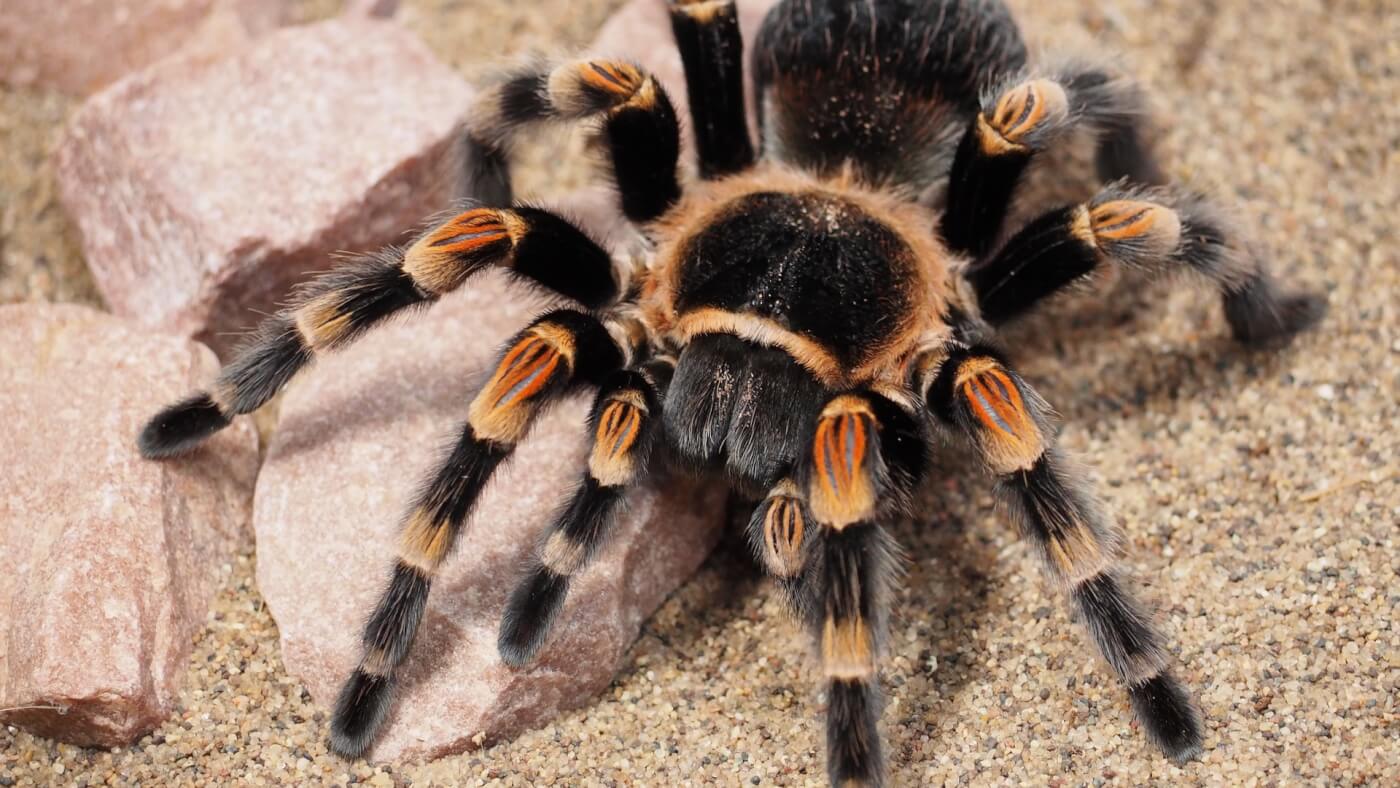
4. Chilean rose tarantula

  • Lifespan: females commonly 15 to 20 years or more
  • Why it suits beginners: slow, quiet and docile
  • Care notes: a deep substrate, a water dish and minimal handling

5. Guinea pigs

  • Lifespan: about 5 to 7 years
  • Why it suits beginners: social, gentle and vocal
  • Care notes: keep them in pairs, offer unlimited hay and daily vitamin C

6. Budgerigar (parakeet)

  • Lifespan: commonly 5 to 10 years
  • Why it suits beginners: small, social and can learn to mimic sounds
  • Care notes: a spacious cage, daily time out, a varied diet and avian vet care

Costs to consider

Plan for the animal, the enclosure, heating and lighting, food, and emergency vet care. Reptile and exotic vets are less common than dog and cat vets, so find one before you buy.

Questions to ask yourself

  • Can I commit for the animal’s full lifespan?
  • Is it legal where I live?
  • Do I have a vet who treats this species?
  • Am I comfortable feeding live or frozen prey, if required?

FAQ

What is the easiest exotic pet to take care of?

Leopard geckos and corn snakes are commonly recommended because of their calm nature and hardiness.

Are exotic pets safe for children?

Reptiles can carry Salmonella, so always supervise and wash hands after contact. Guinea pigs and budgies are usually better for young children.

Where should I buy an exotic pet?

Choose a reputable breeder or rescue and avoid wild-caught animals.

This guide is for general information only and is not a substitute for advice from a qualified veterinarian. If your pet seems unwell, contact your vet.

More Details